Ruhee Dewji
Retro #12: April
I felt sluggish, disinterested, adrift, dissatisfied this month. It was a slog.
I’ve seen a few creators I like categorizing their time by what they consumed and what they produced - not in a productivitymaxxing way, but more like “am I spending too much time consuming and not enough time creating?” sort of way (I’ve also seen references to “consuming hobbies” and “producing hobbies”). I really like this! I think this month felt blobbish because I didn’t make things—everything just entered my brain and sat there slowly going sour.
(In the newsletter I linked above, Reo Eveleth also has some great comments about sassy first-person narrators in sci-fi, including this one: These stories also almost all mistake “describing an interesting premise” with “executing an interesting premise”. Shots fired.)
Admittedly, though, I did consume some good stuff. It was a great month for shows: I saw Haley Heynderickx & Max García Conover (you should check out their album if you like folk), Snail Mail, Forty Seven Teeth and High Home, Brennan Wedl with Waxahatchee & MJ Lenderman (damn, that was an incredible show), and Ace of Wands. I read four books (Bird Suit and There is No Antimemetics Division were highlights). I read a lot of articles. It wasn’t all bad.
I also benched 100lbs this month! One hundred pounds! I’ve wanted to do that forever. It wasn’t even that hard, which has happened before on an all-time PR and suggests I should be pushing myself a little more.
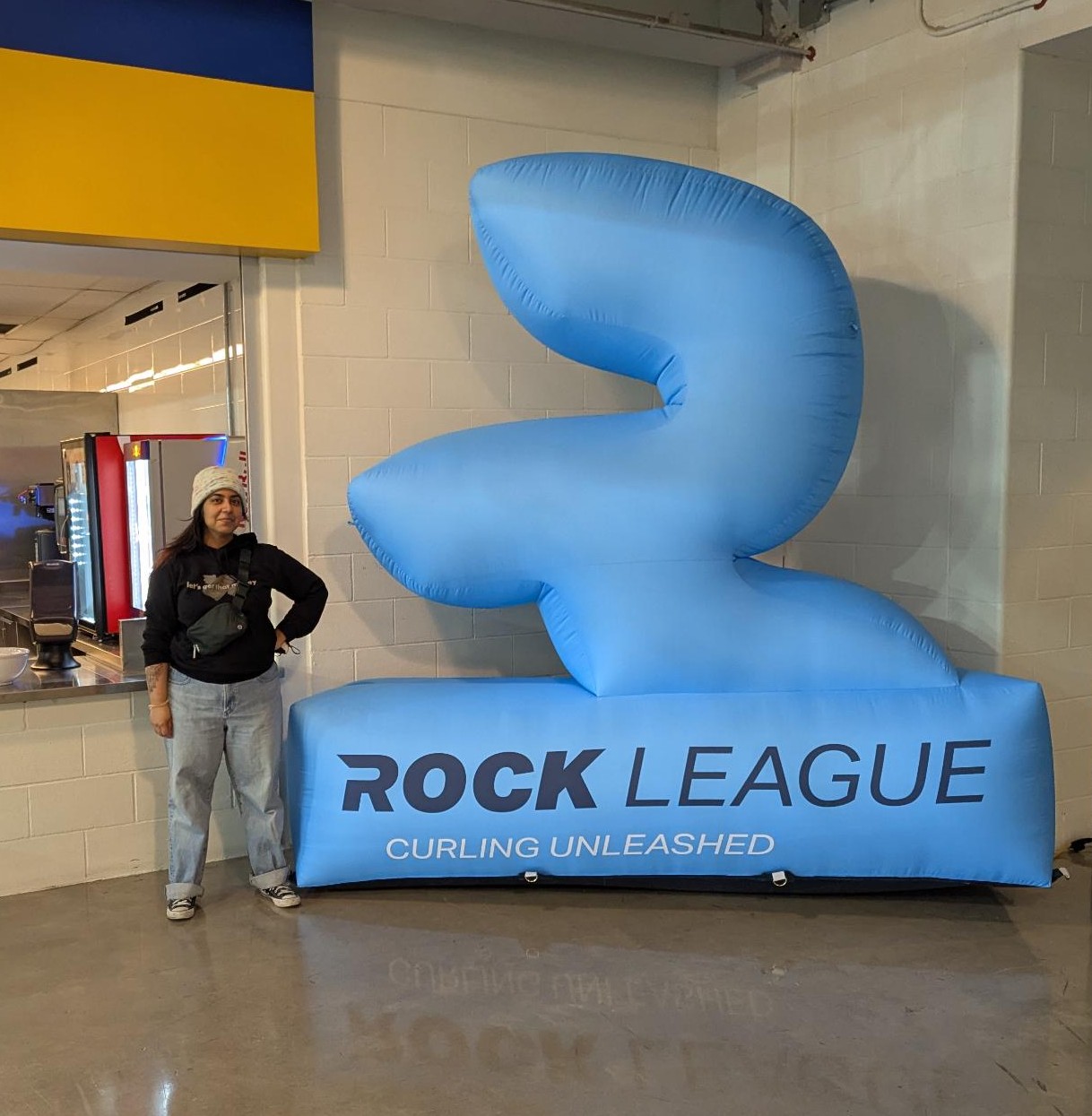
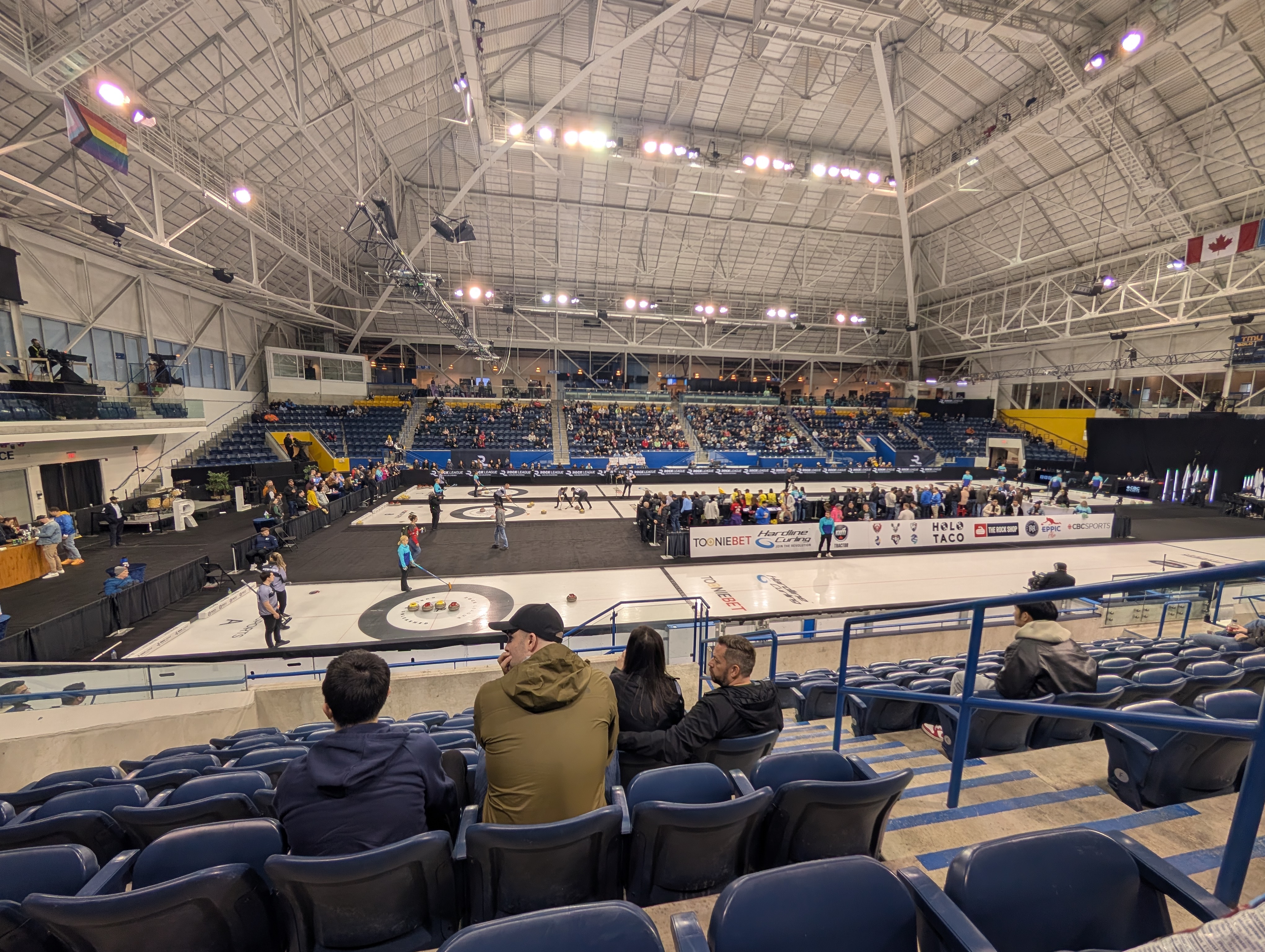
And I got to see the Rock League championship final - it’s the first professional curling league and featured big stars from all over curling (perfect timing to do this right after the Winter Olympics too). We had an awesome time.
The psyop
One of the primary items of Discourse this month, and the thing that I read the most articles about, was the band Geese and the so-called revelation that their PR company Chaotic Good had fabricated a bunch of their “organic” reach. Using fake followers and comment bots and the like, CG made it seem like they were mega-popular and got them onto other people’s FYP/recommendations/etc.
I first heard about this from this essay a former bandmate and dear friend sent me. That essay referenced this Billboard article, and in the days following, there was this Wired piece that completely blew up. Everyone I knew was talking about it, probably because almost everyone I know is an artist of some kind. I muted the word “psyop” on Bluesky. Everyone was fighting about organic reach and “real marketing” and “engagement” and “authenticity” - I suspect that last one is why it really touched a nerve. Everything feels fake these days. It probably is fake. And here’s the proof!
My first reaction to all this was despair. It’s incredibly discouraging to imagine that all the bands enjoying reasonable success, or even some small portion of them, are faking it like this in a way that tricks you into thinking it’s real organic artisanal excitement. It feels wild that we live in a world where you can just brag about faking all your engagement until it becomes real engagement, and you’re not worried about the backlash. Indie musicians (like me!) make zero money on music and are usually losing tons of it all the time—it’s cost-prohibitive to tour, it’s incredibly expensive to make records, nobody can make the economics work anymore. Even massive stadium tours are cancelled all the time! This feels bad.
But this edition of the Garbage Day newsletter made me think again:
There are a lot of companies out there that claim they can manipulate The Algorithm and impact how users behave. And, in my experience, the majority of these companies cannot do that. The companies that own the algorithms can barely do that! This was my gripe with all the Cambridge Analytica stuff back in 2018. Is it creepy that these companies exist? Yes. Is it hilariously lame that Geese’s label or whoever hired Chaotic Good? Oh, yeah, one of the lamest things I’ve heard in a long time. That’s the real scandal, if you ask me lol. But at no point did WIRED ask Chaotic Good for proof that any of this even works. There are no links to the accounts Chaotic Good is operating, no examples of them successfully hijacking video platforms, no metrics that prove their alleged army of Geese video clippers have accomplished anything at all. Across all the reports on Chaotic Good, the only firm example I’ve found of anything they’ve done is from this Billboard interview from March. The company’s founders bragged that they were able to get Yellowjackets fans to make “40,000 creates” featuring a song from folk musician Kevin Atwater. Very cool! I’ve never heard of him. Seems like it worked.
We all took Chaotic Good at face value, and that only benefits the PR firm and penalizes Geese, a band that actually has been grinding away for a while (and has, as Ryan Broderick pointed out in Garbage Day, rich parents to help out). For us to believe that Chaotic Good can manipulate the algorithm perfectly allows two things to happen: we all clutch at this perfect algorithm-buster trick that we can just see over the horizon, just out of reach, and we keep trying to catch it, futilely, forever; and Chaotic Good makes an unholy amount of money.
Authenticity has always been a difficult concept to grasp; sometimes you have it or you don’t, at least in the eyes of the faceless audience that judges you, but if you’re proven not to have it, that’s worse. Manipulating the algorithm might be this generation’s “selling out”. But I’m not really sure anymore what they did manipulate—except that (cynical half-joking take incoming) a lot more people have heard of Geese now…
A cursed thing I read
There’s this Toronto Star article (gift link) about how local condos were mostly designed to be investment units, rather than places people live. This isn’t a surprise to anyone who’s seen a few of them—when I was looking for mine (I own and live in a condo now) none of the kitchens were particularly functional, and many of them were barely usable at all. The place I bought has the only reasonably normal den layout I saw, as opposed to a random triangular spot that just increased the square footage uselessly. But get a load of these quotes:
In recent years, “end users” — industry jargon for people who want to live in their condos — were often an afterthought as developers marketed many tiny units in tall glass towers to investors. But now investors are nowhere to be found.
INDUSTRY JARGON FOR PEOPLE WHO WANT TO LIVE IN THEIR CONDOS
“Amid this turmoil, some builders are pivoting towards bigger suites, consolidating smaller units, and paying attention to details like elevators, and sound proofing. The goal is to attract a new group: owners who are looking for homes.”
Lmao.
How fucked up is it that “hey, do you think we should make homes that people want to live in?” is this radical shift? I hate it. Especially because, of course, if you bought a condo as an investment unit there was often (but not often enough) … someone else … living there. Fuck.
Things I liked this month
- These crocheted artworks by Nicole Nikolich that reference old-school technology are so, so cool. KID PIX!!!
- Another month, another Patrick Radden Keefe article - this time a fascinating story about an organized insurance conspiracy to cause car crashes and claim the payouts in New Orleans.
- I can’t believe we got a new Holy Fuck album in the year of our lord 2026, and it’s really good.
- The new Ace of Wands is also absurdly good.